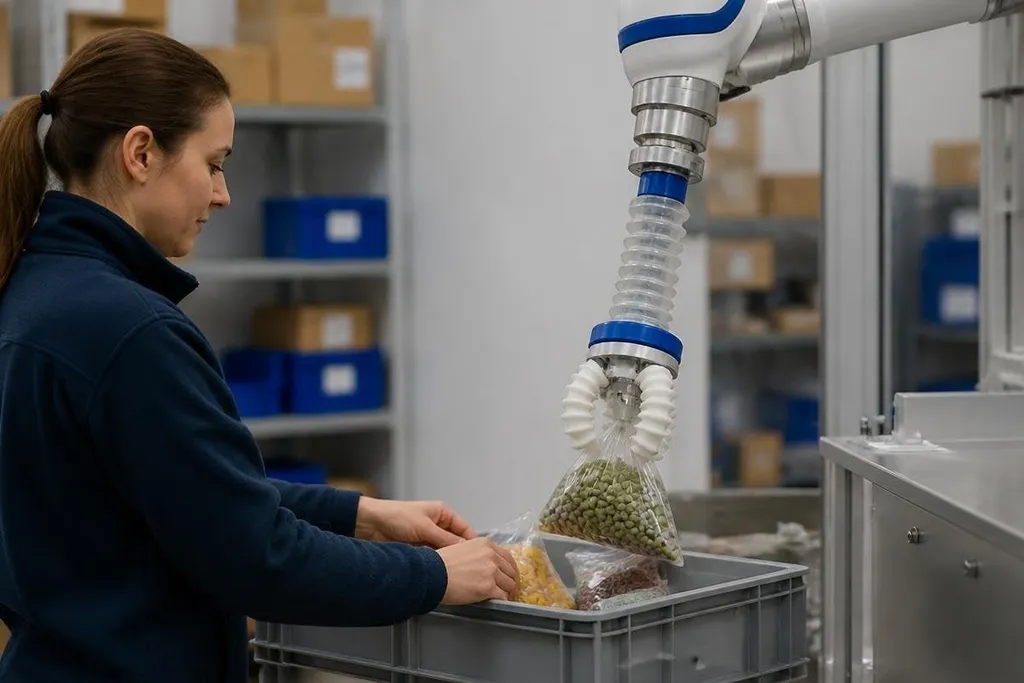
Soft robots bend, squeeze, and give way where a metal arm holds its shape. That difference could help automation work near people, fragile goods, and changing surfaces.
The open question is practical: can soft parts stay reliable after thousands of work cycles? This article looks at how the machines work, where they fit, and what still needs proof.
Quick read
- Flexible bodies reduce force during contact
- Air pressure can move grippers without many rigid joints
- Long service life and precise control remain open tests
How soft robots move
Traditional robots use rigid links joined by motors. Soft robots use flexible materials, such as silicone or other elastic polymers, that change shape when air pressure, fluid pressure, cables, or small motors act on them.
The moving part is called a soft actuator. One common design has chambers inside a flexible body. Pump air into those chambers and the body bends toward one side. Release the pressure and the body returns toward its first shape.
That design changes the problem for a gripper. A rigid claw needs its fingers and force sensors to line up with an object. With a soft finger, the material can wrap around uneven shapes, which may help it hold fruit, fabric, medical items, or parts with thin walls.
The same give also limits control. A soft finger may hold an object well but tell the robot less about its exact position.
Engineers can add pressure sensors, stretch sensors, cameras, or force sensors, but each extra part adds cost and another failure point.
Where the approach fits
Soft robotics makes the most sense when contact is hard to predict. A warehouse robot sorting boxes sees more repeatable shapes than a machine handling loose clothing or food, so the second task gains more from flexible contact.
A medical device may also need a soft section. A flexible tool can move through a curved space with less pressure than a rigid tool, but that does not make the task safe by itself. The design still needs testing for control, cleaning, material wear, and failure.
Agriculture presents a similar case. Produce varies in size, shape, and firmness. A gripper that uses flexible fingers may spread its contact force over a larger area, reducing damage during pickup. That claim still needs results from the exact crop, tool, speed, and work setting.
A soft gripper's value changes with the crop, pickup speed, and contact force. Robot24 gives industry readers a way to compare those details with reported machine tests before the next section examines the physical limits behind them.
The limits are physical
Flexible materials wear. Repeated bending can change their shape, weaken a seal, or create a small leak. Heat, oil, sharp edges, sunlight, and cleaning chemicals can also affect the material, depending on its design.
Control can be harder too. A rigid arm has a fairly clear link between motor movement and tool position. A soft body may bend differently after temperature changes, wear, or a different load. The controller needs sensor data and a model that can handle those changes.
Speed remains a tradeoff. A pump must move air or fluid through the actuator, and that takes time. A cable-driven design may move faster, but its cables, guides, and motors still need space and care.
I’d back soft robotics first in tasks where gentle contact matters more than speed or exact position.
What buyers should check
A gripper can look ready in a short video. Before you plan a purchase or pilot, ask for results from the work you need it to do.
- Test material: Ask which objects the robot handled, including size, weight, surface, and shape.
- Cycle count: Find out how many open-and-close cycles the actuator completed before inspection.
- Contact control: Check how the system senses grip force and detects a dropped object.
- Cleaning needs: Confirm which fluids, temperatures, and cleaning agents the flexible parts can handle.
- Failure plan: Ask how the robot behaves after a leak, sensor fault, power loss, or torn surface.
Those answers tell you more than a video of a gripper picking up one object. They also show whether the soft part lowers total work or shifts maintenance into a less visible area.
Soft robotics may become a major part of automation, but the useful path is narrower than the broad claims suggest. The machines need to prove that flexible contact can survive real cycle counts, service conditions, and downtime rules before they replace rigid tools in routine work.